10 Reasons Why This "Cartilage Growth Peptide" Drink Works When Glucosamine Didn’t
Joint stiffness isn't permanent. It's a signal — your cartilage needs targeted support. Give it what it needs, and things can change.
Your knees lock up every morning like they forgot how to bend. The stairs make you wince before your foot hits the next step. Activities you loved now come with a pain tax you pay for hours afterward.
Most people think this is just "normal aging."
The truth is, your cartilage cells haven't died — they've stopped receiving the signals they need to rebuild, so the cushioning between your joints gets thinner every year.
It's called collagen biosynthesis decline. Your body's cartilage-building process slows down — producing less and less new cartilage to replace what wears away.
When this happens, cartilage thins like brake pads grinding to nothing. Movement gets rougher, stiffer, and every step reminds you something's wrong.
JointGel® delivers the exact bioactive collagen peptides clinically shown to stimulate cartilage growth from within. It doesn't mask discomfort — it helps rebuild the cushioning you've been losing. Thousands have already discovered this "Cartilage Growth Peptide" drink.
1. You Feel It Working In Weeks (Not Months Or Years)
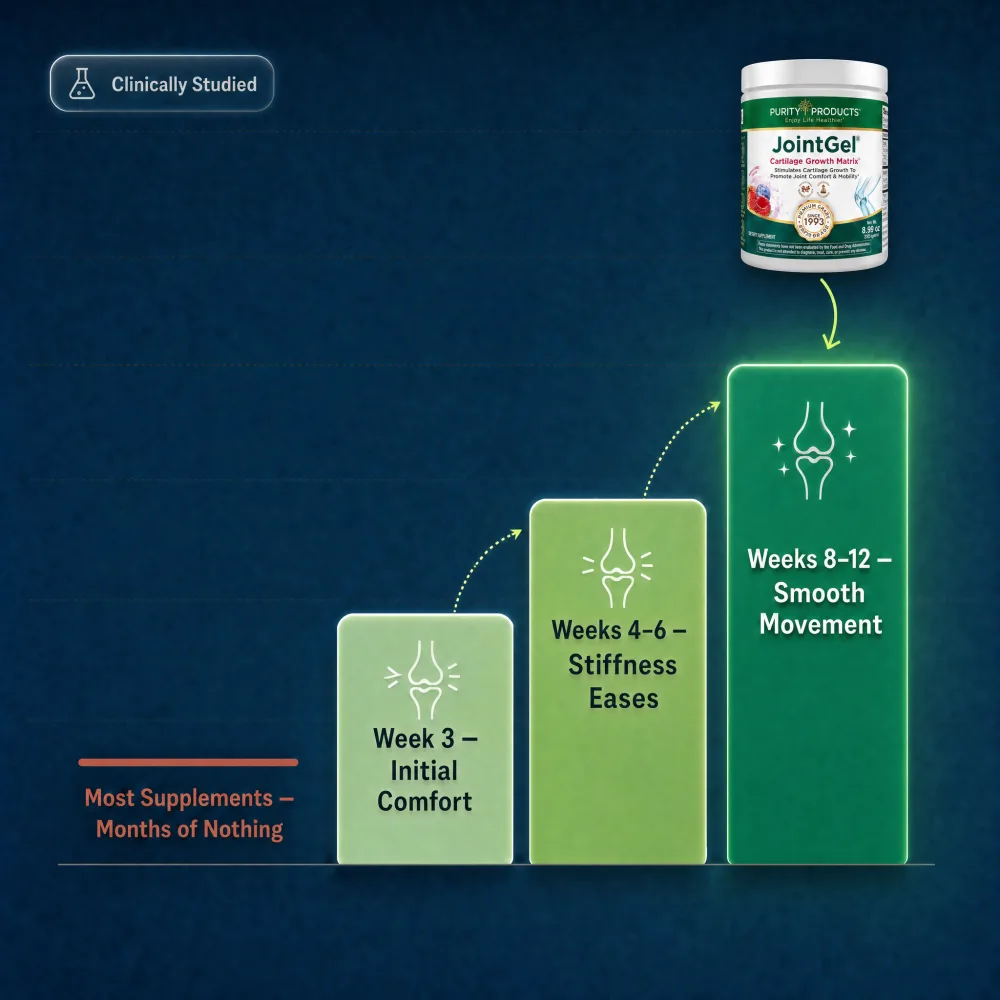
Most joint supplements ask you to swallow pills for months — no feedback, no noticeable change, just blind faith. That's a lot of patience for zero payoff.
JointGel® is different. It delivers FORTIGEL® Bioactive Collagen Peptides — a clinically studied, patented form of collagen designed to stimulate your body's own cartilage-producing cells.
And because it's a refreshing drink — not another pill — it becomes part of your morning, not a chore.
Many users report noticeable joint comfort within just 3 weeks. By weeks 4–6, stiffness starts easing. By weeks 8–12, smooth movement becomes your new normal.
And the benefits keep building the longer you use it.
2. The Morning Stiffness, The Creaking, And The "Warm-Up Period" Finally Stop

Every morning, same story. Feet hit the floor. Knees refuse to cooperate. You shuffle to the bathroom like your joints need 15 minutes to remember how to work.
That "warm-up period" happens because your cartilage has thinned — there's not enough cushioning to allow smooth movement after hours of stillness.
FORTIGEL® stimulates your body's own cartilage-producing cells, helping rebuild that lost cushioning layer over time.
The result? You swing your legs out of bed and just... walk. No shuffling. No grimacing. No waiting for your body to catch up to your brain.
3. The Aching And Discomfort During Movement Finally Ease Up

Remember when walking didn't require a cost-benefit analysis? When you didn't think twice about bending down or taking the stairs?
That activity-related discomfort happens because weakened connective tissue can't support impact the way it used to.
OptiMSM® delivers bioavailable sulfur — a critical building block your tendons and ligaments need to maintain elasticity and strength. It supports the connective tissue surrounding your joints, so movement feels supported instead of punishing.
That grocery run doesn't end with you icing your knees. That walk around the neighborhood doesn't cost you the rest of your afternoon.
4. You Can Stay Active Without "Paying For It" The Next Day
When was the last time you did something physical and didn't dread the next morning?
For most people with stiff joints, every active day comes with a recovery tax — sometimes lasting two or three days.
Without adequate cartilage cushioning and connective tissue support, your joints take a beating from activities your body used to handle easily.
JointGel® supports both — cartilage rebuilding through FORTIGEL® and connective tissue strength through OptiMSM®.
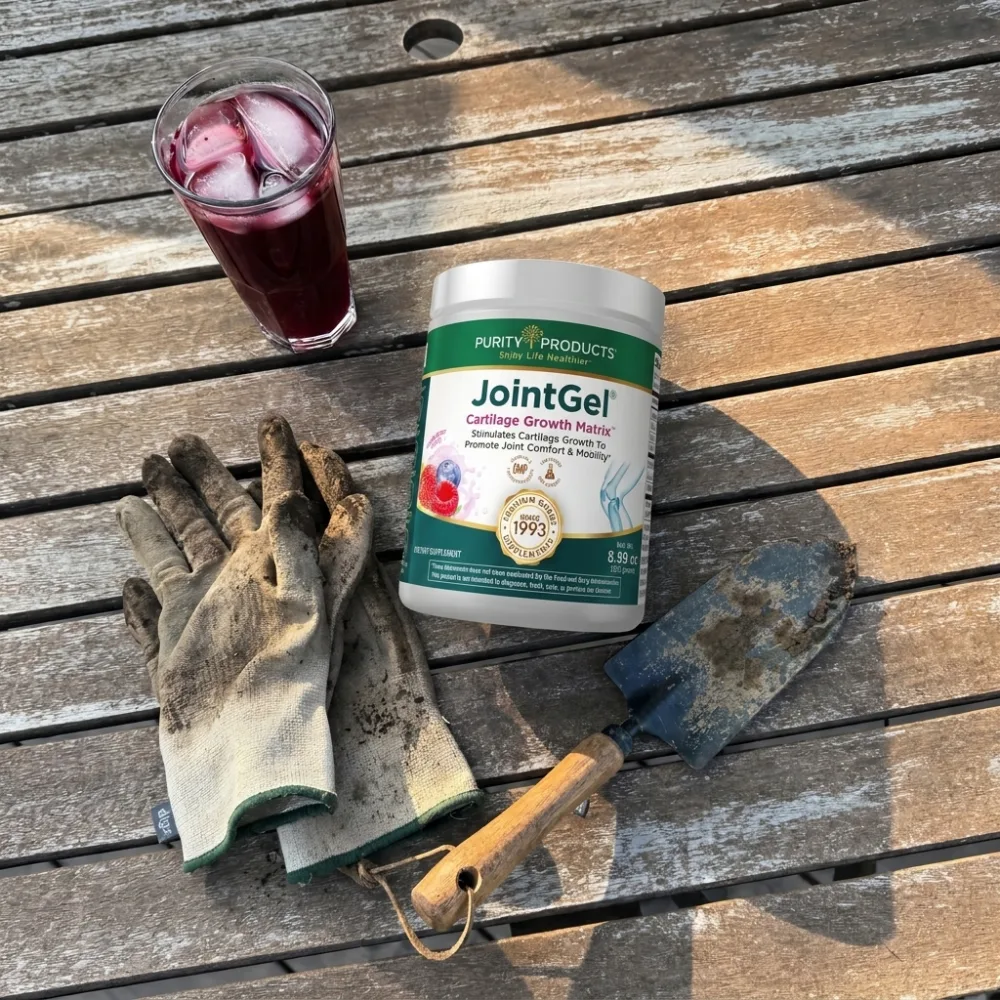
Gardening on Saturday doesn't mean limping on Sunday. Playing with grandkids doesn't mean canceling Monday.
You stay active — and your joints finally keep up.
5. You Move Through Your Day Instead Of Planning Around Your Joints

Why does a trip to the store require strategic parking? Why do you scope out the elevator before committing to a building?
When joint stiffness controls your decisions, your world quietly shrinks.
JointGel's dual-action formula helps restore comfortable movement by supporting both cartilage and connective tissue — the two systems responsible for how your joints feel during everyday motion.
As cushioning rebuilds and connective tissue strengthens, those small negotiations with your body start disappearing.
You take the stairs because they're there. You park wherever there's a spot. You stop planning
6. The Benefits Don't Stop At Your Joints — Your Whole Active Life Opens Up

Joint stiffness doesn't just affect your knees or hands. It affects your confidence, your independence, your willingness to say "yes."
When every movement carries risk, you start declining invitations, skipping outings, sitting out the moments that make life worth living.
As JointGel® helps rebuild cartilage and strengthen connective tissue, something bigger happens — you start trusting your body again.
You say yes to the hike. You accept the dinner invitation downtown. You stop being the person who "sits this one out."
That shift — from hesitation to confidence — is what users notice most.
Already convinced? Most people are by this point.
Try JointGel® Risk-Free — Up To 50% Off Your First Order7. Your Whole Joint System Starts Working With You — Not Against You
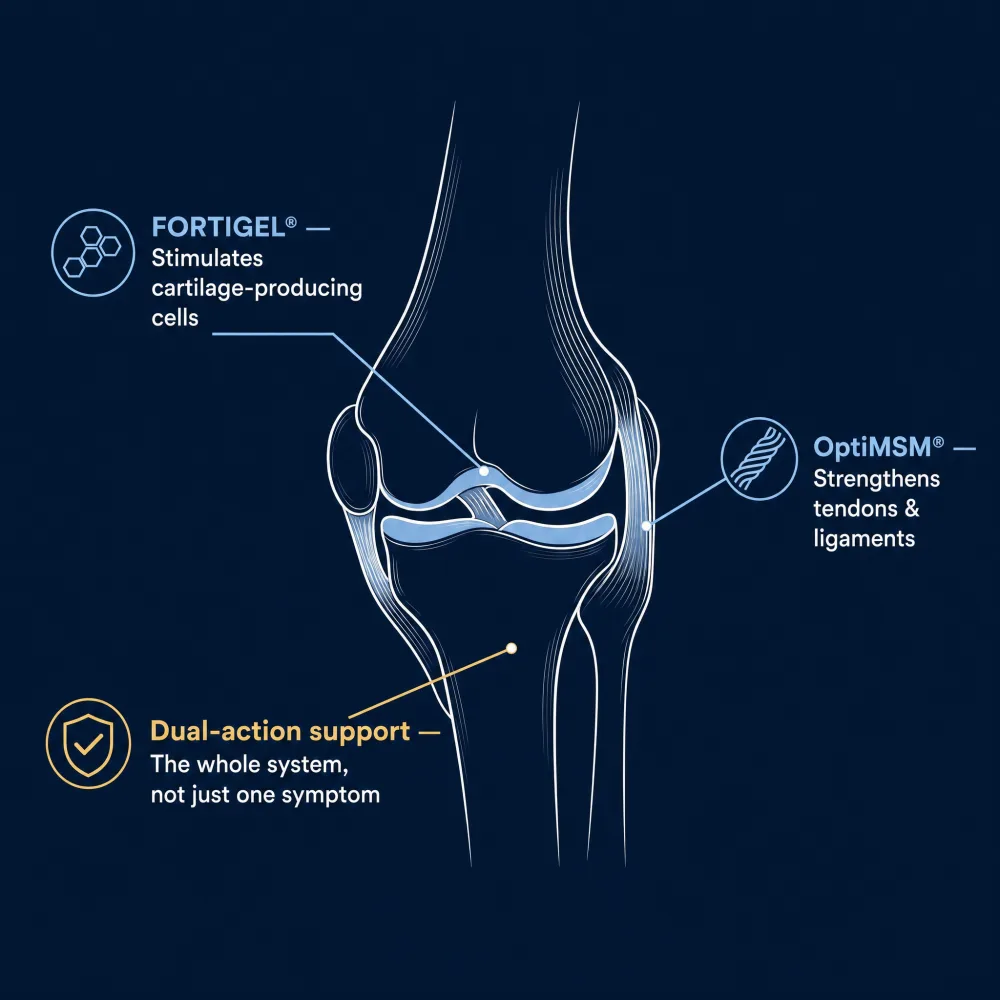
JointGel® doesn't target one symptom. It supports the entire joint ecosystem — cartilage, tendons, ligaments, and connective tissue — so everything works together the way it should.
FORTIGEL® stimulates your body's own cartilage-producing cells, helping rebuild the cushioning that protects bones during movement. OptiMSM® strengthens the connective tissue holding everything together while also supporting antioxidant capacity for overall joint function.
This means you're not chasing temporary comfort — you're investing in the long-term structural health of your joints.
Research on the ingredients in JointGel® shows benefits that continue building with consistent use — with studies tracking improvements over 48 weeks and beyond.
This isn't a band-aid. It's a rebuilding program.
8. It's Formulated With Clinically Researched Ingredients That Actually Work
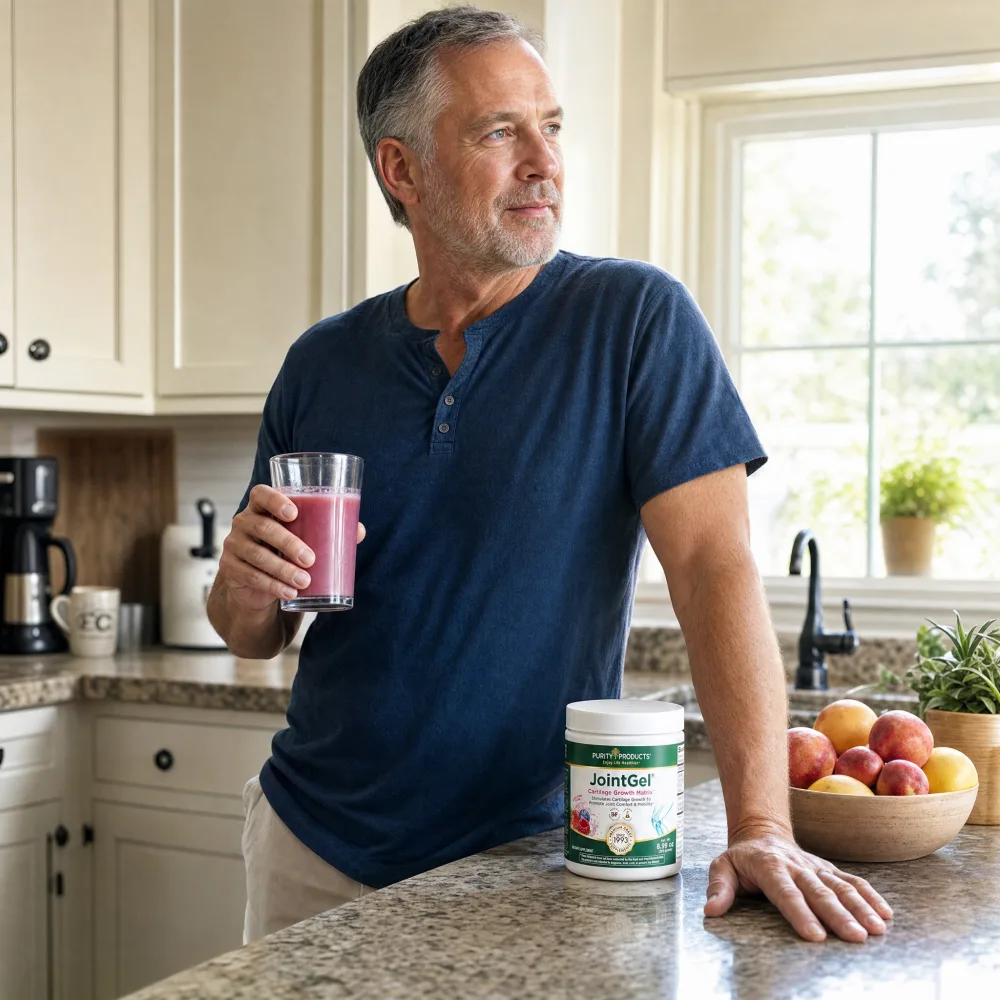
Most joint supplements stuff a capsule with generic ingredients and hope for the best. JointGel® is different — and the ingredient quality proves it.
FORTIGEL® Bioactive Collagen Peptides — Not generic collagen. FORTIGEL® is a patented, clinically validated form specifically optimized to stimulate cartilage-producing cells. Research shows it supports joint structure and integrity at the cellular level — something bulk collagen powder simply cannot do.
OptiMSM® — Not bargain-bin MSM. OptiMSM® is an ultra-pure, bioavailable form of sulfur that supports connective tissue integrity, flexibility, and antioxidant capacity — manufactured through a proprietary distillation process for maximum purity.
JointGel® is produced in cGMP-compliant facilities. Every ingredient is laboratory tested before use. Every finished batch is tested again before it ships.
You're not just reading a label — you're getting ingredients your body can actually use.
9. It Attacks The Problem From Two Angles (Not Just One)
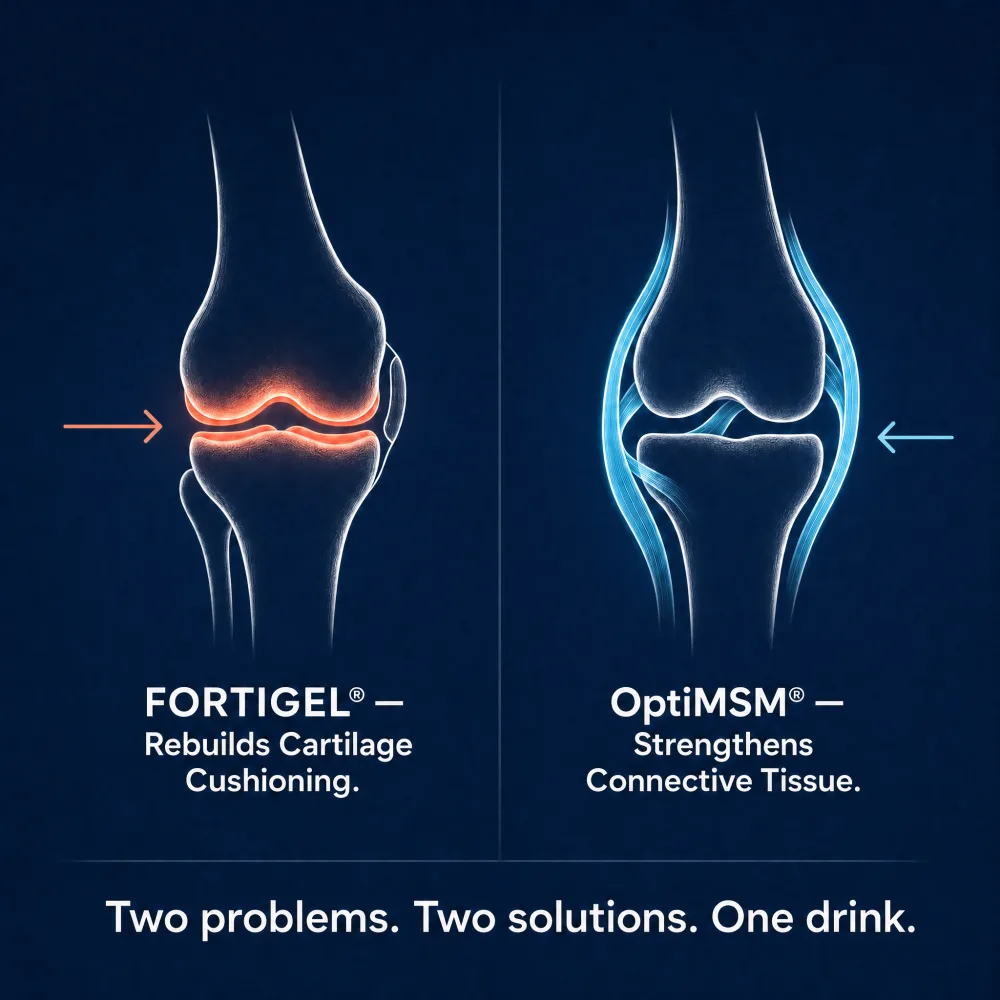
You've probably tried glucosamine. Maybe turmeric. Maybe a generic collagen powder.
And you were disappointed.
Here's why — those approaches only address one piece of a multi-part problem.
Joint stiffness isn't just about cartilage. It's also about connective tissue — the tendons and ligaments surrounding and supporting every joint. Fix one and ignore the other, you still feel it.
JointGel® addresses both. FORTIGEL® stimulates cartilage rebuilding. OptiMSM® strengthens connective tissue.
First it helps restore cushioning. Then it reinforces the framework holding everything together.
That's why people who saw nothing from single-ingredient supplements finally feel a real difference with JointGel®.
10. Try It Risk-Free For 60 Days — Better Movement Or Every Penny Back
After everything you've tried, skepticism makes sense. We get it.
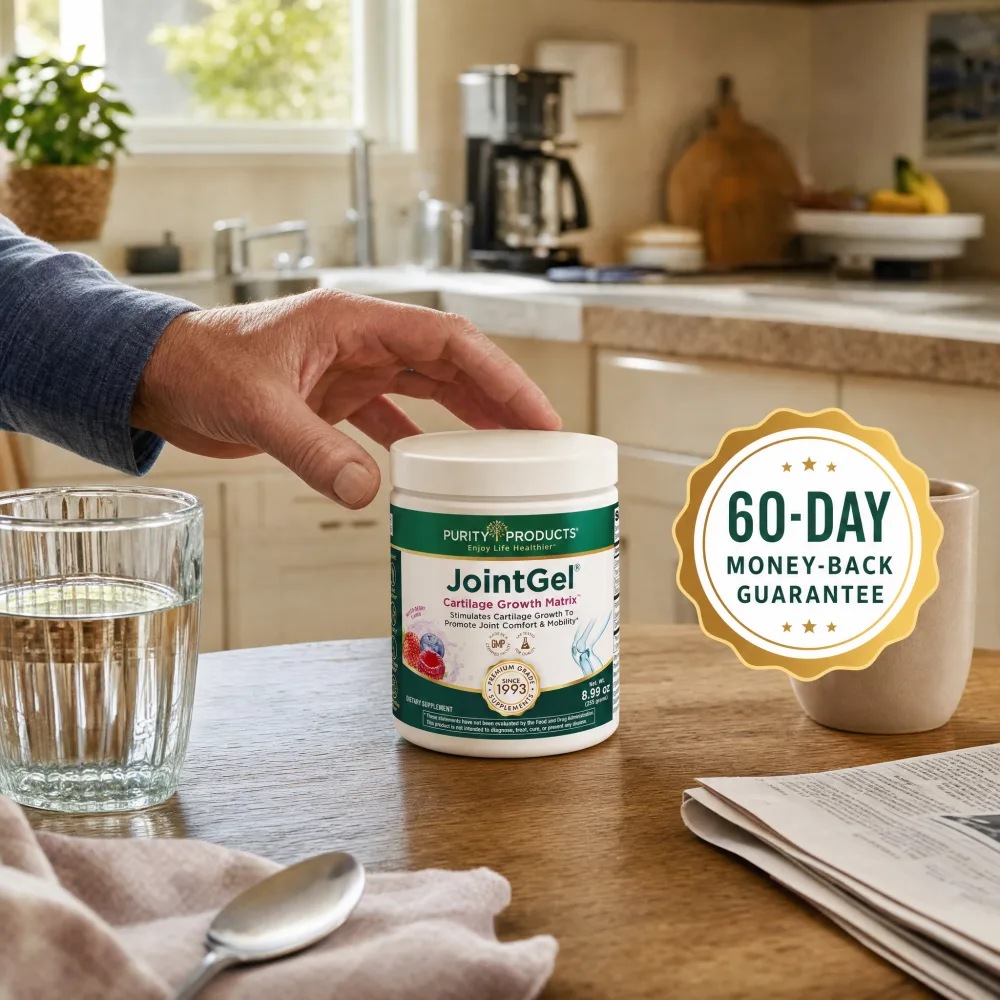
That's why Purity Products backs JointGel® with a 60-day money-back guarantee. No questions asked.
Try it yourself. Feel the morning stiffness ease within weeks. Notice the stairs getting easier. Watch the activities you'd given up start coming back into your life.
If you don't feel a genuine difference in how your joints move and feel — send it back for a full refund.
Over 4,000 people bought JointGel® in the last month alone. Most come back for more.
You have nothing to lose — and comfortable, easy movement to gain.
This Isn't Just About Less Stiffness — It's About Being YOU Again

This is about standing up from a chair without bracing yourself on the armrests. Walking through the farmer's market without watching the clock on your knees. Keeping up with your grandkids instead of watching from the bench.
It's about being the person who says "yes" again — to the hike, the trip, the spontaneous afternoon out — instead of quietly calculating whether your joints can handle it.
JointGel® doesn't just rebuild cartilage. It rebuilds your confidence that your body will show up when you need it to.
That's not a supplement. That's your life back.
Note: This Limited Promo is NOT Available on Amazon
Every Day You Wait, Your Cartilage Gets A Little Thinner
Here's the hard truth — cartilage doesn't regenerate on its own. Once it starts thinning, the process accelerates. The cushioning you're losing today doesn't come back without intervention.
Every morning you wake up stiff, every staircase you avoid, every activity you sit out — that's the gap widening between where you are and where you could be.
JointGel® is available right now with 50% off your first order for new subscribers. But that introductory pricing won't last forever — and with over 4,000 bottles sold last month, supply moves fast.
Don't wait for the stiffness to get worse before you act.
Note: This Limited Promo is NOT Available on Amazon
Your Questions, Answered
60-Day Money-Back Guarantee